

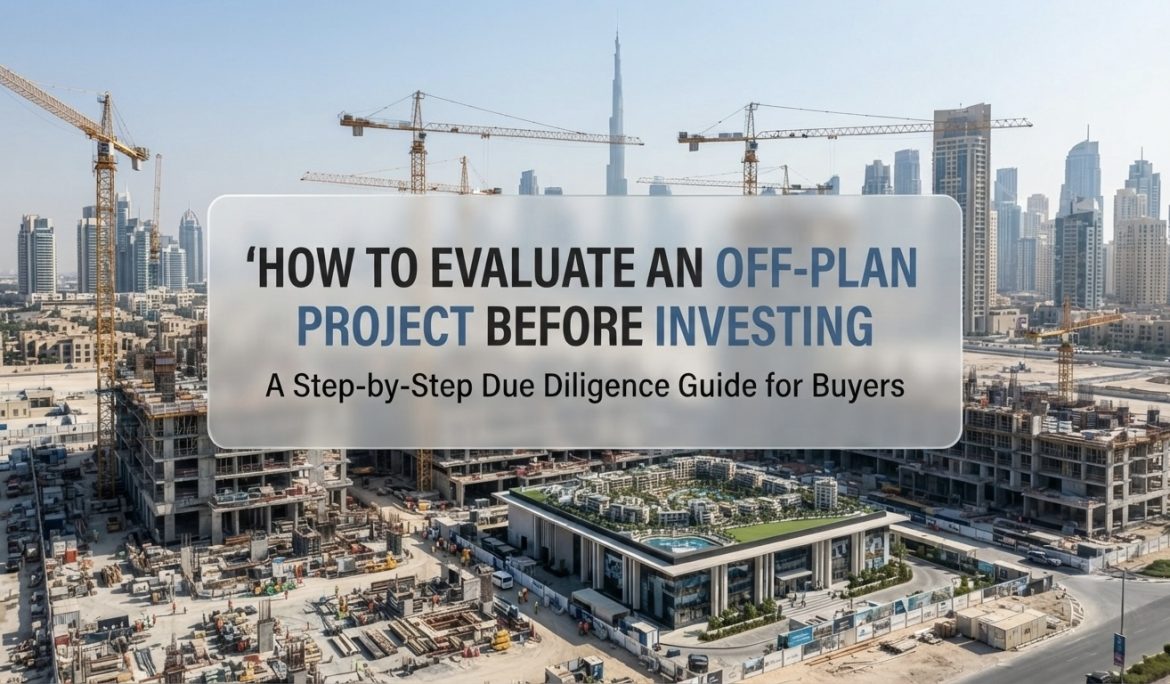
Buying an off-plan property offers excellent investment opportunities. However, every project deserves careful evaluation before you commit.
Many investors focus only on attractive prices. Nevertheless, successful investing requires much deeper research.
A well-chosen project can deliver strong capital appreciation. Likewise, it can generate impressive rental income after completion.
On the other hand, selecting the wrong project may delay returns. Therefore, investors should follow a structured evaluation process.
This guide explains how to evaluate an off-plan project before investing. Furthermore, it highlights the most important factors every buyer should consider.
Why Proper Evaluation Matters
Investing in off-plan real estate differs from buying completed properties.
Instead, buyers invest in a future asset. Consequently, confidence in the developer becomes essential.
Proper evaluation helps investors reduce risks. Moreover, it improves the chances of long-term profitability.
Careful research also prevents emotional buying decisions. As a result, investors protect their capital more effectively.
1. Research the Developer’s Reputation


The developer represents the foundation of every off-plan investment.
Therefore, begin by reviewing the developer’s history.
Consider the following factors:
- • Previous completed projects
- • Delivery timelines
- • Construction quality
- • Customer satisfaction
- • Financial strength
- • Market reputation
Reliable developers usually complete projects on schedule. Additionally, they maintain consistent construction quality.
Delayed projects often affect investment returns. Hence, choosing an experienced developer reduces unnecessary risks.
2. Evaluate the Project Location
Location remains one of the strongest investment drivers.
Consequently, investors should study both current demand and future growth.
Look for projects near:
- • Metro stations
- • Business districts
- • Schools
- • Hospitals
- • Shopping malls
- • Beaches
- • Parks
- • Major highways
Growing communities often provide higher appreciation potential. Furthermore, infrastructure improvements increase future demand.
Areas with government investment frequently outperform mature locations over time.
3. Study the Master Community
Never evaluate only the building.
Instead, understand the entire master community.
Ask yourself:
- • Will new schools open?
- • Are parks included?
- • Will retail outlets operate nearby?
- • Is public transportation planned?
- • Does the community offer lifestyle amenities?
Large master-planned communities usually create stronger long-term value.
Moreover, integrated communities attract both tenants and end-users.
4. Review the Floor Plans Carefully


A beautiful brochure does not guarantee a practical layout.
Therefore, inspect every floor plan carefully.
Focus on:
- • Room sizes
- • Balcony dimensions
- • Natural lighting
- • Storage space
- • Kitchen layout
- • Privacy
- • Functional design
Efficient layouts generally attract more tenants. Likewise, they achieve higher resale values.
5. Compare Pricing with Nearby Projects
Price alone never determines investment quality.
Instead, compare similar developments nearby.
Evaluate:
- • Price per square foot
- • Expected rental yield
- • Expected appreciation
- • Community demand
- • Building specifications
Competitive pricing often creates stronger upside potential.
However, extremely cheap prices may indicate hidden concerns.
6. Understand the Payment Plan
Flexible payment plans improve investment affordability.
Nevertheless, buyers should understand every payment stage.
Review:
- • Booking amount
- • Construction installments
- • Handover payment
- • Post-handover plan
- • Service charges
Longer payment plans reduce financial pressure.
Additionally, they improve cash flow management.
7. Check the Expected Completion Date
Construction timelines directly affect investment returns.
Therefore, review the expected handover schedule carefully.
Ask about:
- • Current construction progress
- • Project milestones
- • Previous delivery history
- • Completion guarantees
Developers with strong delivery records inspire greater investor confidence.
8. Verify Legal Approvals
Every off-plan project should meet legal requirements.
Consequently, buyers should verify official approvals before investing.
Confirm:
- • Project registration
- • Escrow account
- • Land ownership
- • Developer licensing
- • Sales approvals
Legal verification protects buyers throughout construction.
Moreover, it reduces unexpected complications.
9. Analyze Future Rental Demand


Rental income remains a major investment objective.
Therefore, study the tenant demand before purchasing.
Consider:
- • Nearby employment centers
- • Universities
- • Tourist attractions
- • Business districts
- • Population growth
High-demand locations generally maintain stronger occupancy rates.
As a result, investors enjoy more stable rental income.
10. Evaluate Future Capital Appreciation
Strong appreciation depends on multiple factors.
Consequently, avoid relying on marketing promises alone.
Instead, analyze:
- • Infrastructure projects
- • Population growth
- • Government investment
- • Community expansion
- • Market supply
Emerging districts often deliver higher appreciation potential.
However, mature areas may provide greater stability.
11. Review Available Amenities
Amenities significantly influence property value.
Furthermore, quality facilities increase tenant satisfaction.
Look for:
- • Swimming pools
- • Fitness centers
- • Children’s play areas
- • Landscaped gardens
- • Walking tracks
- • Retail outlets
- • Smart home features
- • Security services
Better amenities usually improve occupancy rates.
Likewise, they strengthen resale demand.
12. Understand Service Charges
Many investors overlook service charges.
Unfortunately, high maintenance costs reduce net returns.
Therefore, estimate annual expenses before investing.
Lower service charges often improve long-term profitability.
13. Compare Similar Developers
Never evaluate only one project. Instead, compare multiple developers.
Review their:
- • Construction quality
- • Pricing
- • Payment plans
- • Completion history
- • Customer reviews
This comparison helps identify stronger investment opportunities.
14. Assess Exit Strategy
Every investment should include an exit plan.
Therefore, consider resale demand before buying.
Ask yourself:
- • Will future buyers like this property?
- • Does the layout suit families?
- • Will investors find value?
- • Is the location improving?
Properties with broad market appeal usually sell faster.
15. Understand Market Conditions
Real estate markets move through cycles.
Therefore, study current market trends before investing.
Review:
- • Supply levels
- • Demand trends
- • Interest rates
- • Population growth
- • Economic outlook
Market timing improves investment decisions.
Additionally, it helps maximize long-term returns.
Common Mistakes Investors Should Avoid
Many buyers repeat similar mistakes.
Avoid these common errors:
- • Buying without research
- • Ignoring developer history
- • Chasing unrealistic discounts
- • Overlooking service charges
- • Ignoring location quality
- • Depending only on brochures
- • Skipping legal verification
- • Following market hype
Smart investors rely on data instead of emotions.
Final Checklist Before Investing
Before signing any agreement, confirm the following:
- • Trusted developer
- • Strong location
- • Practical floor plan
- • Competitive pricing
- • Flexible payment plan
- • Legal approvals
- • Quality amenities
- • Future infrastructure
- • Rental demand
- • Capital appreciation potential
Final Thoughts
Evaluating an off-plan project requires patience and careful research.
Fortunately, a structured approach makes investment decisions much easier.
Developer reputation should always come first. Meanwhile, location remains equally important.
Legal verification also protects your investment. Furthermore, realistic financial planning reduces unnecessary risks.
Successful investors analyze every detail before purchasing. As a result, they maximize returns while minimizing uncertainty.
Ultimately, informed decisions create stronger portfolios and long-term wealth through off-plan real estate.
Read More: Step-by-Step Guide to Buying a Property in Dubai for Expats

 Dubai Investment Park (DIP), Dubai








 Dubai Investment Park (DIP), Dubai